A Beginner's Guide to Choosing Blanks for Print-on-Demand
August 17, 2026
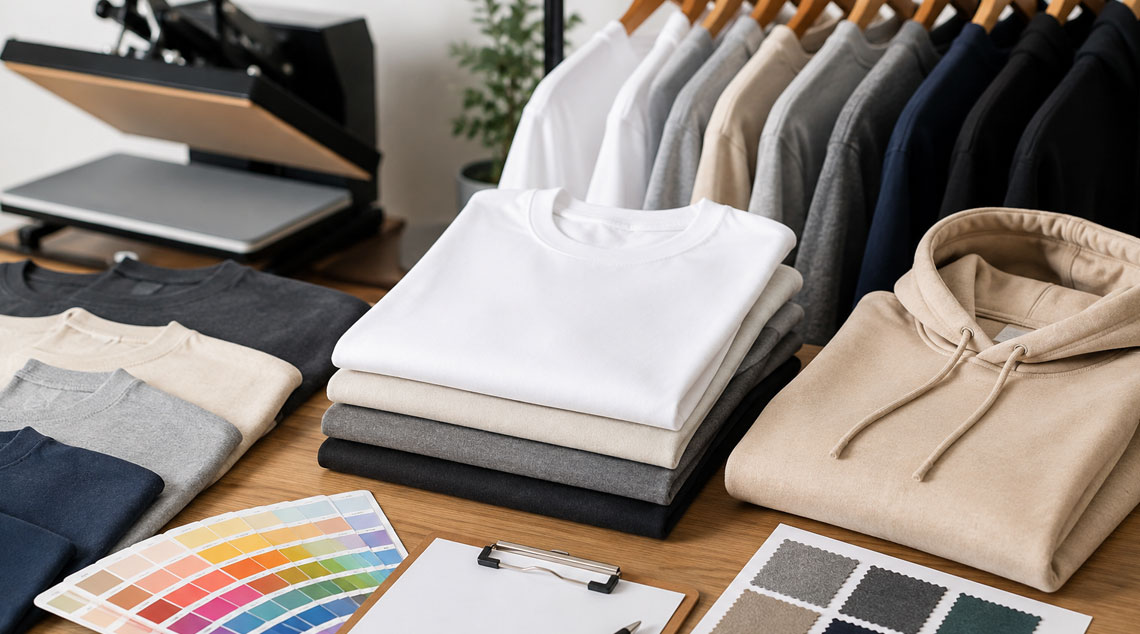
While it may appear straightforward to start a print-on-demand apparel store, this becomes tricky upon receiving your first sample shirts and discovering that the shirt isn’t what you had imagined. While your designs may look impressive on the computer screen, your consumers will be basing their judgment on the actual shirt’s fabric, fit, print quality, and durability. As such, the choice of your blank plays an immensely crucial role in developing print-on-demand apparel. Regardless of whether you’re considering selling print-on-demand T-shirts, hoodies, or print-on-demand tees, choosing the right blank provides a reliable basis for your designs.
What Are Apparel Blanks?
Apparel blanks are those garments that have no designs printed on them, meaning that they will require you to personalize them through printing or embroidering. Examples include T-shirts, hoodies, sweatshirts, tanks, and sports clothing. In a print-on-demand business, the blank is the product that the customer gets after the design is added to it. The fabric of the blank, its construction, dimensions, and surface may influence how comfortable the garment is and its decoration. Thus, choosing the right wholesale blanks should not be an easy task.
Why Blanks Matter
The blank impacts all aspects of the final product, from the way the garment feels to the way the artwork looks when the piece is washed. The fabric type could impact the printing process, and the GSM value could impact the final construction of the garment. The fit would impact your sizing chart and customer expectations, and the construction could affect where you could place the artwork on the garment. This is especially true with print-on-demand T-shirts, since customers judge the product as much by feel and fit as by the graphic.
Choose the Right Fabric
The fabric construction would be another important consideration to evaluate, since the fibers have different features. Cotton is a popular choice for creating casual garments due to its traditional comfort and compatibility with decoration techniques. Blended cotton-polyester fabrics may provide varying degrees of softness, durability, and wrinkle resistance. Moisture-wicking fabrics would be better for performance-based products. When evaluating wholesale blanks, it is recommended to pay attention not only to the fibers, but also to fabric construction and finishing.
Cotton Blanks
Blank cotton is a good choice for many types of print-on-demand T-shirts because of its versatility and suitability for many casual products. However, it is possible that two products made from the same material can differ greatly from one another when it comes to softness and durability because of differences in yarn, knitting, and finishing. Moreover, cotton may react differently to washing; therefore, it is necessary to conduct shrinkage tests on the product before ordering it.
Cotton-Poly Blends
The mixing of cotton and polyester fibers creates traits that will be different from those normally associated with the use of cotton fibers. The combination may give the fabric various useful traits such as shape retention, durability, softness, and moisture management. Some of these traits can make the fabric ideal for some print-on-demand apparel collections where a certain touch is required. Nonetheless, the mixture of fibers can affect how the fabrics react to various decorating processes. Test the fabric with your designs before making a permanent selection.
Moisture-Wicking Blanks
Moisture-wicking blanks are manufactured specifically for athletic, training, and performance wear products in which moisture-wicking is a key requirement. These technical fabrics could be lighter weight and behave in a way that's different from regular cotton T-shirts. This could also have an impact on how well they take the decorating process. Therefore, it wouldn't be wise to treat these products the same way that you would treat regular cotton blanks. If your company deals specifically with performance print-on-demand tees, you will need to check out the results.
Understand Blank GSM
GSM is used to indicate fabric weight and can be used as an excellent baseline for comparison of clothing. Light blanks would mean lightness, mid blanks would offer a balance between comfort and strength, and heavy blanks would mean more structure. However, GSM itself cannot be used as an indicator of quality since two fabrics of the same weight can differ in their properties entirely. When choosing wholesale blanks, you should take into account both GSM and the nature of the fabric itself.
Select the Right Fit
Fit will dictate how your final product will appear and what the customer experiences once the order reaches them. The typical fit will give you a familiar look, whereas a retail fit will be more formed and modern. The oversized blank will give more room and could work for brands that sell more casual and streetwear-like items. Never take anything at face value by just looking at the terms classic, retail, and oversized; always compare measurements in the actual garments. Size consistency is crucial for print-on-demand T-shirts because you have to match your product photography.
Retail Fit
Blanks that are designed to have a look similar to retail shirts can come in handy when you desire to maintain a contemporary look without venturing into oversized shirts. Their dimensions might give a better look for graphic print-on-demand tees and casual clothing lines. The words 'retail' and 'modern' may differ from one manufacturer to another, and it is important that you check the measurements before selecting a shirt. It is even better if you have a physical shirt to see the measurements on it.
Oversized Fit
The oversized blanks are made with much looser proportions than regular fits and are able to give an overall casual look. The oversized blanks are usually taken into consideration while designing print-on-demand apparel inspired by the contemporary streetwear culture. It cannot be said that just getting a bigger size of a regular shirt will give you the proportions of an oversized blank. Measure the exact proportions and pattern of the blank before making the choice. Also, test your graphics because there will be more printable area.
Check the Print Surface
The material surface is what will form the basis of your work of art; hence the need for you to pay attention to the texture and consistency of the material. While a smooth surface may give you an expected canvas for your designs, a textured surface may create a different effect. The construction features of the T-shirt, including the seams, pockets, collar, ribbing, and panels, may also be a limiting factor in where you position your artwork. The issue becomes relevant when comparing print-on-demand T-shirts since you have to take into consideration that your graphics will fit on the material.
Match Blanks to Printing
Each decorating technique interacts with fabric differently; therefore, your choice of blanks should be done simultaneously with your printing decisions. Your choice of screen printing, direct-to-garment printing, embroidery, and sublimation may vary in terms of their requirements for fabric. Fiber type, color, surface, density, and construction could influence your end product. In case you utilize print on demand for t-shirts, do not take for granted that all blanks offered for customization will give you the same results.
Screen Printing
Screen printing can work across many commonly used apparel fabrics, but the exact blank still influences the finished result. Fabric color, composition, surface texture, and density can affect coverage, appearance, and hand feel. Large graphics should be tested on the actual garment because the print can feel different depending on the underlying fabric. Washing the finished sample can also reveal whether the artwork maintains its appearance. For businesses selling print-on-demand tees, testing representative graphics before scaling can reduce production surprises.
DTG Printing
Direct-to-garment printing places particular importance on the fabric surface and fiber composition because artwork is applied directly to the garment. Different blanks can produce differences in color reproduction, detail, surface appearance, and overall print feel. If your business relies heavily on detailed graphics, test your actual artwork on the exact blank you intend to sell. This is especially important when evaluating print-on-demand T-shirt services, because the quality of the blank and decoration process work together. A sample print provides much more reliable information than a product description.
Embroidery
Embroidery requires a blank that can support stitching without excessive distortion or discomfort. Fabric thickness, stretch, stability, and construction can all influence how embroidered artwork sits on the garment. A lightweight T-shirt may behave differently from a heavyweight sweatshirt or hoodie when dense stitching is applied. Placement also matters because seams and pockets can reduce the usable embroidery area. If embroidered products are part of your print-on-demand apparel range, test both the finished appearance and the garment's comfort before scaling.
Sublimation
Fiber content is something that needs to be considered when using sublimation, as the process relies on the acceptability of the fabric for dye. Fabric that is synthetic is better suited for use in this case rather than normal cotton-based fabrics. If you want to provide sublimated print-on-demand T-shirts, then you should choose fabrics that suit this process rather than adapting an unsuitable fabric. Even the color of the fabric may affect the final result, and therefore testing is important.
Budget or Premium Blanks?
Affordable blanks may be helpful in the case where you are doing design tests, validating demand, or reaching clients that appreciate value for money. Affordable blanks may assist a new venture in experimenting with its products without having to incur high costs on its first product. Heavyweight or premium blanks may suit the company better in case the nature of fabric and construction are important in positioning the product. Neither choice may be suitable for all firms. When buying wholesale blanks, consider the garment, customer, selling price, and artwork.
Choose Better Blank Hoodies
When looking for the best blank hoodies for printing, think of more than just GSM and consider the entire hooded sweatshirt. The hood, fleece structure, sleeve and waistbands, pocketing, seams, and sizing could all influence the outcome. A heavy hooded sweatshirt could have a substantial feel but might not suit everyone or every weather condition or decorating technique. Think about where your designs are going to go and whether there is adequate space on the hood for your artwork. The best method of testing whether the hoodie should be included in your POD collection is by printing and washing a sample.
Why Samples Come First
Ordering samples before committing to larger quantities is one of the most effective ways to reduce purchasing risk. A specification sheet can provide fabric composition, GSM, measurements, and other useful details, but it cannot fully communicate how a garment feels or performs. Inspect the sample for stitching, collar shape, fabric consistency, measurements, and overall construction. Then apply your actual artwork and wash the finished garment according to its care instructions. This process can reveal shrinkage, color changes, print problems, or fit changes before they become customer complaints.
Consider US-Based Wholesale Blanks
As for companies doing business with clients in the United States, buying wholesale blanks from a local manufacturer could have some logistical benefits. Local purchasing might facilitate communication, order fulfillment, and minimize certain risks associated with international shipping. In addition, it could be easier to review samples and discuss quality control issues when you need a steady flow of products. However, international purchasing does not mean that you cannot succeed, since long shipment times and customs regulations could necessitate some extra planning. In that case, a reliable local wholesale partnership might come in handy for a startup.
Avoid Common Blank Mistakes
One of the most common mistakes is choosing the cheapest blank without evaluating its fabric feel, fit, construction, and print performance. Another is selecting a garment from specifications without ordering a physical sample. Beginners also frequently skip wash testing, even though shrinkage can change the garment's measurements and customer experience. Some sellers also choose blanks based on current trends rather than their target audience and pricing strategy. A better approach is to compare every blank against your actual product requirements before deciding whether the lower price represents genuine value.
Start With One Blank
New sellers do not need a large collection of garments to begin testing a print-on-demand apparel business. Start with one or two carefully selected blanks that match your target customer, artwork, price point, and decoration method. Compare fabric, GSM, fit, measurements, print surface, and construction before ordering samples. Test the finished products, wash them, and record what changes. Once you find a reliable garment, you can build additional designs around it instead of repeatedly changing blanks and creating inconsistent customer expectations.
Use This Blank Checklist
Begin by defining your product type, target customer, selling price, and preferred decoration method. Compare fabric composition, GSM, fit, measurements, construction, and surface quality across potential wholesale blanks. Order samples and test your actual designs rather than relying on generic printability claims. Wash the decorated samples and check for shrinkage, color changes, print durability, and changes in fit. Finally, evaluate your supplier's communication, availability, turnaround, quality consistency, and ability to support repeat orders as your print-on-demand T-shirt business grows.
Build a Reliable Blank Strategy
Your first blank does not need to work for every possible product category. It simply needs to perform consistently for the customers and designs you are targeting. Once you identify a dependable T-shirt or hoodie, keeping that garment consistent can simplify sizing, photography, product descriptions, quality control, and repeat purchasing. You can then expand into additional print-on-demand tees or hoodies based on actual customer demand. This controlled approach is generally more manageable than launching a large catalog before you understand how each blank performs.
Final Thoughts
Choosing blanks is ultimately about balancing fabric, GSM, fit, printability, durability, customer expectations, and cost. A low-priced blank may become expensive if poor quality leads to returns or customer dissatisfaction, while an expensive blank may not suit an affordable product. Test before scaling, wash your samples, and evaluate the finished garment rather than relying only on specifications. Whether you are researching print-on-demand T-shirt services, developing print-on-demand tees, or building a broader print-on-demand apparel collection, working with a dependable wholesale manufacturer such as Zuni Sportswear can give your business a more consistent foundation for long-term product development.