Buying Clothes in Bulk vs Small Batch: Which Is Better for New Businesses?
August 20, 2026
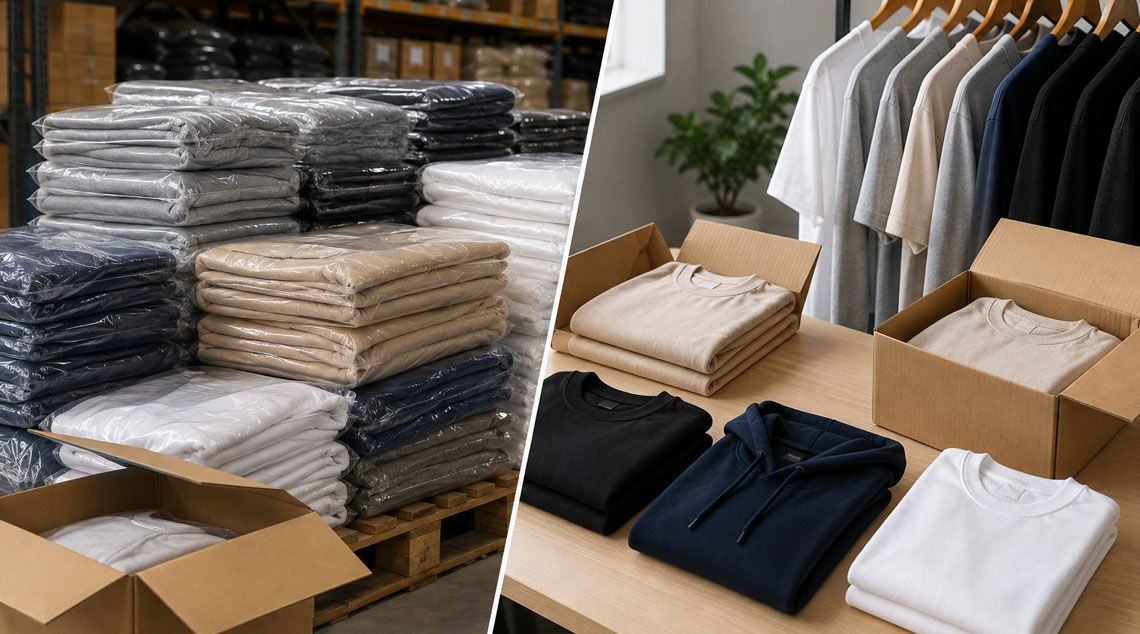
When starting out in a clothing line or fashion store, one thing that needs to be considered is how many units to purchase. Purchase too much and money will be spent on stock that may not be sold. Buy too little and the cost-per-unit will reduce your profit margin. Knowing the true difference between purchasing clothes in bulk and making small purchases allows the entrepreneur to avoid these pitfalls.
What Does Buying Clothes in Bulk Mean?
Buying clothes in bulk just refers to buying clothes in large amounts from a wholesaler or manufacturer at a low unit price. The principle is quite simple; the more you buy in one go, the cheaper each item becomes because the manufacturing costs will be divided into a larger number of items. Companies that know their customers and what works well, or those who want a consistent supply of products, tend to prefer this strategy.
What Is Small Batch Ordering?
The small batch production process involves placing orders for fewer apparel items in terms of the number of each particular style. This is usually done for purposes of testing the design, color, and fit of the clothing, thus avoiding losses that come from having too much inventory. Such an option is more suitable for brands that have not yet established customer preferences and can easily make changes to their designs without much loss in cost.
Why New Businesses Consider Buying Clothes in Bulk
Buying clothes in bulk turns out to be an appealing option when there is already a track record of sales, or an established plan exists for selling the products off the shelves rapidly. The latter could mean an arrangement for regular orders at a print shop or having a lot of customers entering the store. The benefits of such orders include a lower unit price for the clothes, thus a higher profit margin from each order. Uniformity is another benefit due to the one-time production process where all clothes are the same size, color, and fabric quality.
When Small Batch Makes More Sense
Small Batch Ordering is well-suited for companies that are testing out a product idea, introducing a new style, or are constrained by startup budgetary concerns. Small batch ordering allows a company to introduce its design into the market and then increase its order based on how well the product sells. In addition, small batch ordering helps prevent a common mistake made by new businesses that order many pieces of a product in a style or color that does not sell.
How to Order Clothes in Bulk the Right Way
Ordering clothes in bulk works best when approached step by step rather than jumping straight to a large purchase order.
Start With a Sample
Before placing any orders in bulk, always ask for a sample of the very fabric you are planning to buy. Just this one step will ensure that you don’t end up making a costly mistake because of an error in the size, quality, or thickness of the fabric.
Confirm Pricing and Minimums
Each supplier offers unique bulk clothing order pricing; hence, it is prudent to ask about the minimum order quantity, price per piece for various volumes, and hidden charges such as those on shipping or setup. This will save you from nasty surprises when ordering the products.
Plan for Storage and Cash Flow
A bulk order ties up both money and physical space, so it helps to have a realistic plan for where inventory will be stored and how quickly it's expected to sell. Businesses that skip this step often end up with excess stock sitting unsold for months.
Where to Buy Clothes in Bulk
Where to buy clothes in bulk depends greatly on who the buyer is. Print shops and custom branded clothing will go for blank wholesalers providing plain T-shirts, hoodies, and sweatshirts that can be decorated. Stores selling ready items will most likely be dealing with distributors that have ready-made items for sale in bulk quantities. An example of a wholesale clothing provider in the US is Zuni Sportswear, which provides both kinds of items for purchase by different consumers.
Bulk Clothing Manufacturer vs. Bulk Clothing Supplier
A bulk clothing manufacturer is the business actually producing the garments, while a bulk clothing supplier or vendor may source from multiple manufacturers and resell to buyers. Working directly with a manufacturer often means better pricing and more control over quality, since there's no middleman markup. However, some suppliers offer wider product variety by working with several manufacturers at once. Understanding which one a business is actually working with helps set realistic expectations around pricing, lead times, and communication.
Cost Comparison: Small Batch vs Bulk Clothing Orders
The cost difference between small batch and bulk clothing orders comes down to how setup and production costs get divided. In a small batch, those fixed costs are spread across fewer units, so each piece costs more. In a bulk order, the same fixed costs get spread across hundreds or thousands of units, bringing the per-piece price down significantly. This is why a 50-piece order and a 500-piece order of the same design rarely cost proportionally the same, and why bulk buying only pays off once a business is confident the stock will sell.
Common Mistakes When Ordering Bulk Clothing
New buyers ordering bulk clothing often make avoidable mistakes that cost them later. Ordering too many sizes or colors without sales data to back the decision is one of the most common, since it spreads inventory too thin. Skipping the sample stage to save time is another, often leading to a full order that doesn't match expectations. Choosing a supplier based on price alone, without checking fabric quality or communication reliability, tends to create bigger problems down the line than the money saved upfront.
Finding a Reliable Bulk Clothing Supplier in the USA
A reliable bulk clothing supplier in the USA typically offers transparent pricing, reasonable minimum order quantities, and clear communication throughout the ordering process. Domestic suppliers also tend to offer faster turnaround and shipping compared to overseas sourcing, which matters for businesses that can't afford long production delays. Zuni Sportswear works with US-based retailers, print shops, and growing brands, offering low minimum order quantities alongside the option to scale into larger bulk orders as demand grows.
Making the Right Choice for Your Business
There's no universal answer to whether small batch or bulk ordering is better, since it depends entirely on where a business currently stands. A brand-new label testing its first designs is usually better off starting small, while an established retailer with proven demand can benefit from the cost savings of buying clothes in bulk. The smartest approach is often a gradual one: start small, learn what sells, and scale into bulk orders once the risk is backed by real sales data rather than a guess.
Conclusion
Choosing between small batch and bulk clothing orders isn't about picking the "better" option overall; it's about matching the order size to where the business actually stands right now. New brands still testing designs are better protected by starting small, while businesses with proven demand can unlock real savings through bulk ordering. Whichever path fits best today, working with a transparent, reliable supplier makes the process smoother at every stage, and sets the business up to scale confidently when the time is right.
Frequently Asked Questions (FAQs)
Q1: What is considered a bulk clothing order?
Most suppliers treat anything over 100 units per style as a bulk order, though this varies by manufacturer.
Q2: Where can I buy clothes in bulk for my store?
Through wholesale distributors, direct manufacturers, or blank apparel suppliers, depending on your product needs.
Q3: Is small batch ordering more expensive than bulk?
Yes, since production costs are spread across fewer units, raising the price per piece.
Q4: How do I know when to move from small batch to bulk ordering?
Once a style shows consistent sales and demand is backed by real data.
Q5: Do bulk clothing suppliers in the USA cost more than overseas manufacturers?
Not always. Faster shipping and fewer delays often balance out any price difference.