Best Hoodies for Embroidery: What to Look for Before You Order
September 7, 2026
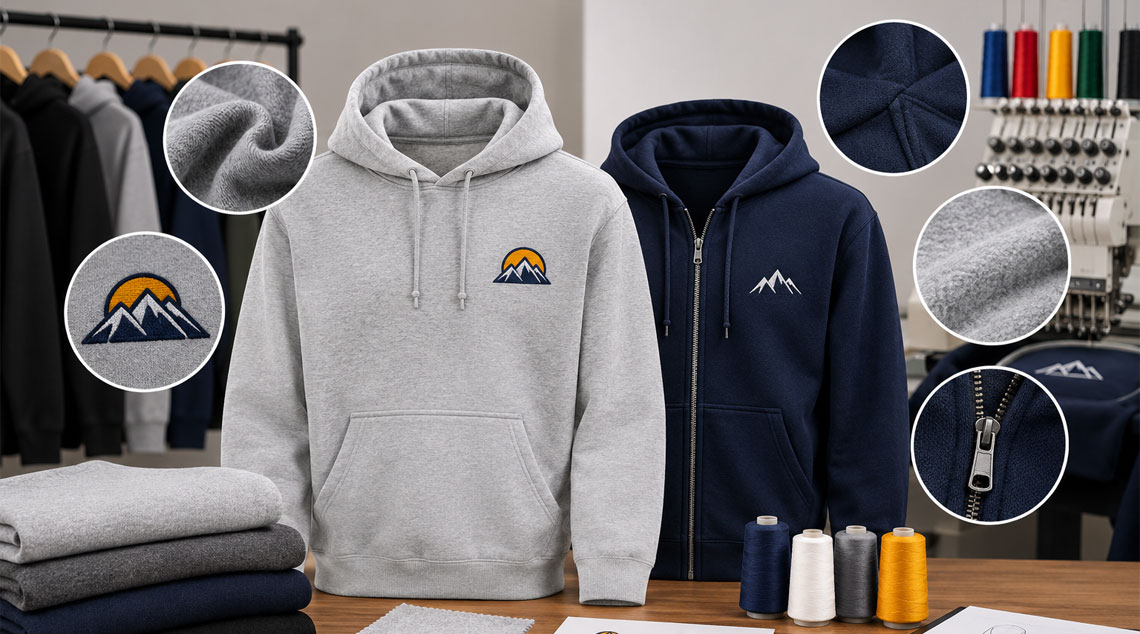
Not all hoodie designs are alike when it comes to embroidery. The hoodie that looks fantastic on the shelf may not be the best hoodie for embroidery because it may pucker, stretch, or leave stitch marks when it goes through the machine. Therefore, selecting the perfect hoodie for embroidery requires more than the selection of soft fabric. Those intending to buy bulk orders of embroidered hoodies in the US must take into consideration a number of fabric factors before placing an order, not after receiving their initial order in poor condition. This guide helps buyers know all there is to consider when selecting hoodies for embroidery.
Why Fabric Weight Matters for Embroidery Hoodies
Embroidery puts real tension on fabric as the needle passes through it repeatedly, so thin or loosely knit material tends to pucker, stretch, or ripple around the design. A hoodie with enough density gives the embroidery foot something stable to work against, which keeps stitch lines clean and logo edges sharp. This is why lightweight, stretchy fabrics built for movement rarely perform well under a needle, even if they feel great to wear. Structure, not softness alone, is what separates embroidery on hoodie projects that look professional from ones that look rushed. Getting the weight right from the start avoids costly reruns later.
Best GSM for Embroidery Hoodies in the USA
Most decorators in America generally agree that hoodies made in the 280-340 GSM range have the ideal level of density required for embroidering. These hoodies have enough density that is required to keep the embroidery stable but not heavy or thick at all. Any lower GSM will result in distortion around the logo due to low density. Higher GSM fleece may be too thick, causing unnecessary bulkiness in the hood and stitches. Zuni Sportswear’s pullover hoodies and zipper hoodies are made in the 285 GSM range, while their extra GSM option includes 340 GSM. Thus, knowing about this GSM range helps in comparing the features of different custom embroidered hoodies rather than just touching and feeling them.
Cotton vs Cotton-Poly Blend Hoodies for Embroidery
Fabric composition plays almost as big a role as weight when it comes to embroidery performance. A higher cotton content gives a smoother, more natural surface for stitching, while a cotton-poly blend adds shape retention and helps the hoodie resist stretching out of place over repeated wear and washing. Fully synthetic or performance fabrics with built-in stretch or coatings tend to interfere with stitch consistency and are generally best avoided for detailed embroidery work. Zuni's hoodies use combed cotton facing over a cotton-poly fleece blend, which is built primarily for a soft, printable surface but also provides a stable base for embroidery. Checking the exact blend percentage before ordering helps set the right expectations for how crisp the final design will look.
Fleece Construction and Embroidery Stability
Apart from weight and GSM, the construction of the fleece plays a critical role in determining the effectiveness of embroidery on the hoodie. The tight, 3-end fleece that does not allow needle penetration and keeps the surface flat throughout the process will give a clean finish to the embroidery, whereas the loose fleece allows for shifting of fibers, leading to fuzziness of the embroidery around the logo. This explains why two hoodies with identical GSM could behave differently after embroidery. When making a comparison of blank hoodies to be embroidered, buyers should inquire about the construction of the fleece in addition to the fabric weight.
Pullover or Zip-Up: Best Custom Embroidered Hoodies
The choice between a pullover and a zip-up hoodie comes down to where the embroidery needs to sit and how the finished product will be used. Pullover styles offer a wide, uninterrupted front panel that works well for larger center-chest or full-front designs, while zip-up hoodies naturally split the front, making them a strong choice for smaller logos placed on either side of the zipper. Both styles can deliver equally strong results as long as the underlying fabric is appropriate for embroidery. Zuni Sportswear offers both a premium pullover and a premium zipper hoodie built on the same 285 GSM cotton-poly fleece, giving buyers a consistent base to choose from depending on the intended placement.
Fit and Placement for Embroidery on Hoodie
Fit type, relaxed, oversized, or classic, will not affect the ability of the fabric to accept an embroidered design, but it may have a slight influence on how the final design will look once it has been placed on the hoodie. A drop-shoulder or an oversized fit might alter how a chest logo is positioned relative to that of a classic fit, and it is therefore wise to consider this during the design process. A small logo will usually be better suited for all fits as compared to a large detailed one, which may appear distorted based on the draping nature of the fabric.
Why Sampling Blank Hoodies to Embroider Matters
Even with the correct GSM, blend, and construction of the hoodie on paper, the best way to determine its performance would be through testing. Embroidering a small sample with your embroidery machine before going ahead with the bulk order will help you see how the fabric will take to the density of the stitches, whether there will be puckering around the edges of the design, and how the logo will look after a few washes. This is even more critical when dealing with bigger designs since a slight change in stabilizer or hooping could make all the difference.
Reliable Hoodies for Embroidery in the United States
When it comes to finding a source of reliable custom hoodies for embroidery, this is about collaborating with a supplier that would be able to provide specific specifications of the fabric used, instead of only providing some vague terms, such as "soft" or "premium." Only when specific GSM, fibers, and other fabric characteristics are known does it become possible to properly compare hoodie blanks to make sure you place an order for the right product. The company Zuni Sportswear, which is a wholesale apparel manufacturer operating in the USA, offers its customers all the information regarding fabric specifications of different kinds of hoodies they produce, ranging from 260 GSM to 340 GSM.
Conclusion
Selecting the proper hoodies for embroidery is not about choosing the softest blank or the most popular one; it is about selecting the fabric weight, blend, and construction compatible with the requirements of the embroidery machine to produce good-looking embroidery. A hoodie from 280 to 340 GSM made of stable cotton or cotton-poly fleece is usually enough for any design to stand the test of time. Sampling of the hoodie in question before the actual run remains the easiest way to verify all of this, no matter if you source domestically in the USA or consider various suppliers. It is all in the details.
Frequently Asked Questions (FAQs)
Q1: What GSM is best for embroidery hoodies?
Most decorators in the USA recommend 280 to 340 GSM for enough structure without excess bulk.
Q2: Is cotton or cotton-poly better for embroidery on hoodie designs?
Cotton-poly blends generally hold shape better, while higher cotton content gives a smoother stitching surface.
Q3: Do pullover or zip-up hoodies work better for embroidery?
Both work well; the choice mainly depends on where the logo needs to sit on the garment.
Q4: Why does fleece construction matter for custom embroidered hoodies?
A tightly knit fleece resists puckering and needle show-through better than a loosely knit one.
Q5: Should I request a sample before bulk ordering blank hoodies to embroider?
Yes, testing a sample confirms stitch quality and fabric behavior before committing to a full order, especially when sourcing from a supplier in the United States for faster turnaround.