Wholesale Blanks vs. Custom Manufacturing: Which Should You Choose?
September 24, 2026
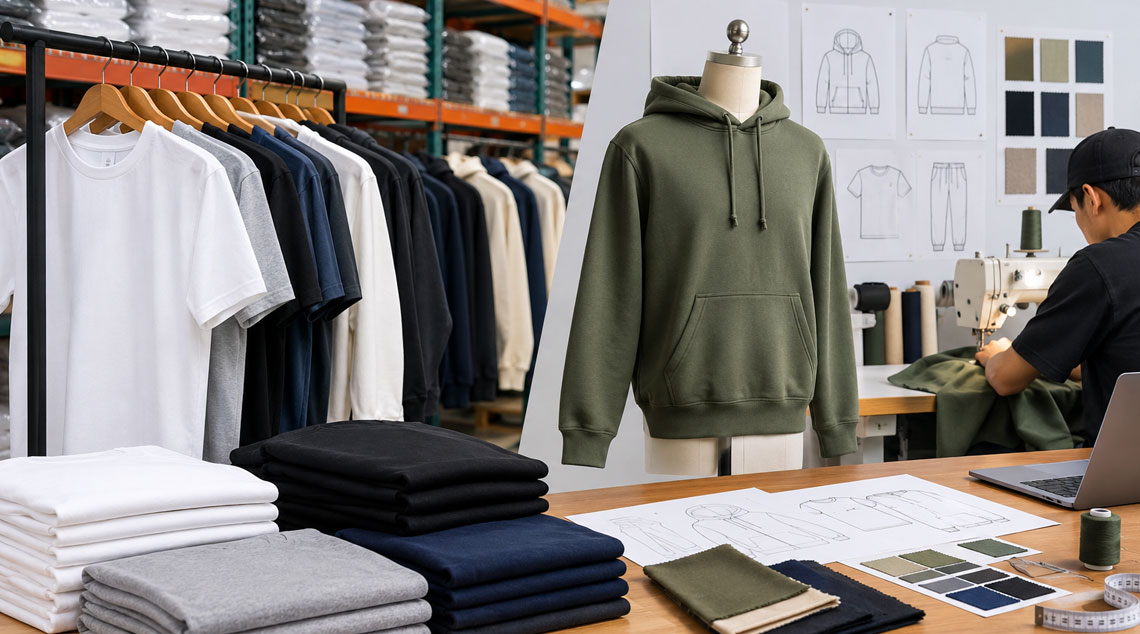
Every fashion brand inevitably encounters the same crossroads: purchase ready-made blanks to design on, or construct your apparel piece from scratch by means of custom manufacturing. Either way you go will allow you to launch a profitable business in the USA, although the processes, associated risks, and expenses are entirely different. Your selection of either wholesale blanks or a custom apparel manufacturer should not be based on what works best in theory but rather on your brand's current reality.
What Are Wholesale Blanks?
Wholesale blanks are those garments which have been produced and are available to be purchased at a cheaper rate because they are pre-produced and unembellished. These blank garments have fits and fabrics which have already been tried and tested by the company that produces them and therefore, no need for pattern making and fabric procurement is required by the customer. Due to the existence of the garment in stock, delivery is usually quicker as compared to any garment ordered to be custom made.
What Is Custom Clothing Manufacturing?
Custom manufacture, also referred to as cut-and-sew, entails a manufacturing plant creating a product from scratch as per the client’s requirements from tech packs, which include information about the fabric, size, measurements, and construction of the garment. In contrast to using a blank clothes manufacturer, the advantage of using this approach is that it allows the company to have absolute freedom to create its own silhouette, fabric blends, and other aspects of design that cannot be found in a blank. The disadvantage of this approach is the increased time required to produce the products.
Wholesale Blanks vs Custom Manufacturing: Key Differences
The main difference between the two is one of control vs speed. The advantage with the wholesale blanks approach is their availability right away, as well as lower risks, because the brand will not be dependent on the production cycle. The custom clothing production approach is the exact opposite, but provides the customer with a fully unique product. Neither one of these strategies is necessarily better than the other, depending on the financial means, the timeframe, and the importance of product differentiation at the particular point in time.
Cost and MOQ Differences
The minimums and cost structures for the two models are quite different. The wholesale blanks have minimums that tend to be lower and more consistent per unit cost because the supplier is manufacturing the standardized items on a larger scale. The custom clothing manufacturer needs to set minimums that are larger due to the costs incurred in the creation of patterns and samples. The understanding of the two models allows a brand to allocate its budget effectively in anticipation of which one to take.
Speed to Market
Speed is one of the clearest advantages of wholesale blanks, since inventory already exists and can often ship within days of an order being placed. Custom manufacturing requires sampling, revisions, and approval before bulk production even begins, which can add weeks or months to a launch timeline. For a brand working toward a specific launch date or seasonal window, this timeline difference often becomes the deciding factor between the two approaches.
When to Choose a Private Label Clothing Manufacturer
The private label clothing manufacturer is in some respects between complete custom manufacturing and plain blanks because the manufacturer produces pre-manufactured clothing that can easily be embellished with the brands' own labeling, tagging, and even a few changes in design if required. This strategy is beneficial for brands that would like a quicker way into the market than complete custom manufacturing, but that still would like something more branded than just plain blanks.
When Custom Apparel Manufacturing Makes Sense
Custom manufacturing becomes the right choice once a brand has a specific design that no existing blank can replicate, whether that's a unique fit, a proprietary fabric blend, or construction details central to the brand's identity. It also makes sense for brands scaling toward larger, stable order volumes, since the higher upfront investment in patterns and samples pays off across bigger production runs over time. Businesses working with a custom apparel manufacturer in the USA also benefit from closer collaboration during development, since decisions on fit and fabric can be discussed and adjusted directly with the production team.
Custom Clothing Production in the USA
Collaboration with a manufacturer in the country for customized clothing production presents certain benefits which come in handy right from the development stage, especially as far as communications and samples delivery is concerned. A team located in the United States is able to examine the tech pack, give feedback and make amendments to the sample much quicker than a company in another part of the world, thus making the entire process from the idea to the final product shorter. Zuni Sportswear provides a custom manufacturing service where one is able either to supply his/her own tech pack or collaborate with the Zuni team in California on developing a design.
Combining Both: A Hybrid Approach
Many growing brands don't choose one path exclusively, instead using wholesale blanks for core, everyday styles while reserving custom manufacturing for signature pieces that define the brand's identity. This hybrid approach keeps cash flow manageable, since blanks can generate steady revenue while a custom line is developed in parallel without pressure. It also allows a brand to test which custom designs are worth the investment before committing significant resources to a full production run. Brands scaling this way often move gradually, starting with blanks and phasing in custom pieces as demand and budget allow.
Conclusion
The choice of wholesaler blanks or custom manufacture relies on a true assessment of where you are in your business journey, your budget and what degree of creative freedom your design requires. Blanks are still the more practical approach in terms of speed and low risk when you’re in the phase of testing and bringing in some money before moving forward with custom manufacturing. Custom manufacturing would only be worth the effort if your business has already reached a certain point and has its unique vision that can’t be achieved with blanks. In many cases in the USA, the best course is a gradual one, beginning with blanks.
Frequently Asked Questions (FAQs)
Q1: What is the main difference between wholesale blanks and custom manufacturing?
Wholesale blanks are pre-made and ready to decorate, while custom manufacturing builds a garment from scratch based on a brand's own specifications.
Q2: Which option is cheaper for a new clothing brand?
Wholesale blanks are generally more affordable upfront due to lower minimum order quantities and no pattern development costs.
Q3: How long does custom clothing production usually take?
Custom manufacturing typically takes longer than blanks due to sampling and revisions, often adding several weeks before bulk production begins.
Q4: Can I switch from wholesale blanks to custom manufacturing later?
Yes, many brands start with blanks to test designs and generate revenue before moving into custom manufacturing once demand is proven.
Q5: Is a private label clothing manufacturer the same as custom manufacturing?
Not exactly. Private label typically means lightly customizing an existing garment, while custom manufacturing builds the product entirely from a brand's own specifications.