Best Blank Shorts for Custom Printing: What Works and What Doesn't
July 1, 2026
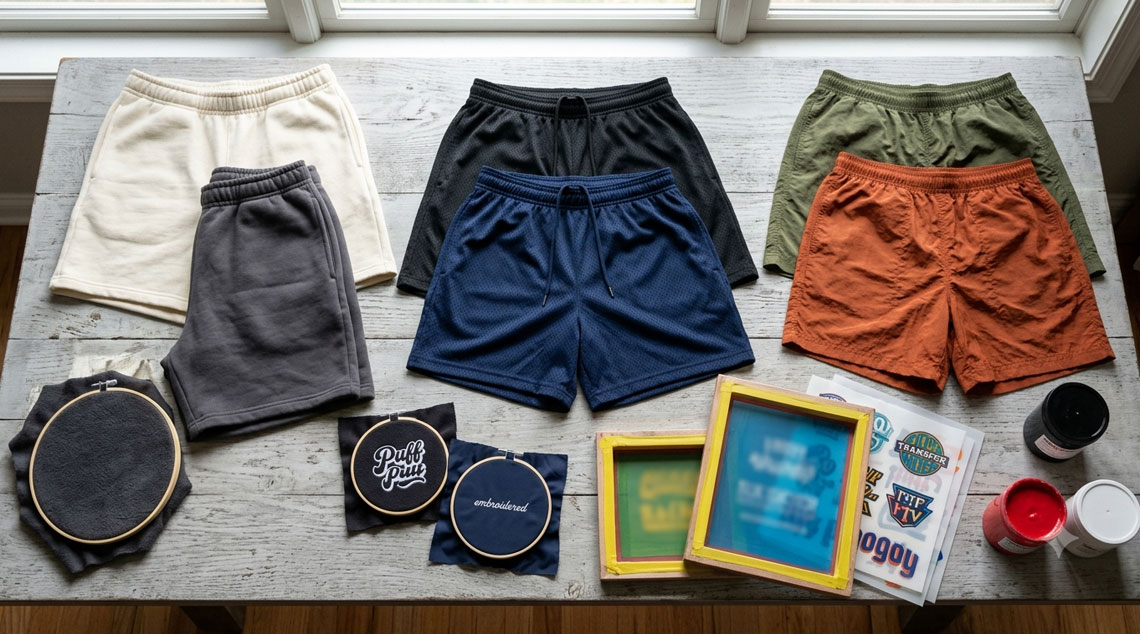
A popular streetwear clothing line came out with its first summer line featuring the same graphic on the back of a pair of shorts. The renderings were flawless, and therefore the company decided not to check samples and ordered the whole production run. When the shorts finally arrived, there was no graphic at all; instead, there were patches of a faded image that didn't resemble the initial design in any way. Neither the design nor the printing equipment was responsible for this failure, but rather the fabric itself. Choosing the right blank shorts for custom printing purposes goes beyond selecting the right color or size; different materials respond to ink and heat in their own ways, making one choice completely inappropriate for a specific design. It is crucial to understand these differences when you deal with clothing lines, a print business, or wholesale blank shorts.
Why Fabric Matters?
While T-shirts and hoodies are typically manufactured using cotton or blended materials, blank shorts come in many more materials. These include fleece shorts, mesh shorts, nylon shorts, French terry, cotton-poly blend, vintage wash, and other kinds of material suitable for various needs. That is precisely why shorts are more challenging to customize than people think. While a technique that is ideal for printing on a heavy-duty hoodie is bound to flop on athletic mesh or lightweight nylon. At Zuni Sportswear, one of the most frequent inquiries is why a print job looks perfect on a sweatshirt but not on shorts. And in most cases, the reason is the choice of material, not the design itself. The choice of the material before picking the decoration technique will help to minimize waste and prevent costly mistakes.
Fleece Shorts
For the best choice when it comes to safety, it is hard to find better options than fleece shorts. These are great because they provide a stable base, which is ideal for decorating with almost any decoration technique, making them one of the most secure choices when it comes to ordering the best blank shorts for custom printing. The majority of high-quality adult fleece shorts are made with 280 to 320+ GSM heavyweight materials, which provide a thick, even surface that does not stretch during manufacturing. In comparison to light sports fabrics, fleece is far easier to decorate with clean and durable results.
Why Heavyweight Fleece Performs So Well
The primary benefit offered by heavyweight fleece is the stability of the material. When it comes to screen printing on the shorts, the material is stable enough to maintain its shape while being pressed, so the ink will cure without moving and produce clear images with strong colors. Moreover, heavyweight fleece makes an excellent choice for embroidering due to the stable structure, which holds the stitches well without causing puckering. Lighter materials tend to move when they are processed, while heavyweight fleece remains stable all the time.
French Terry vs. Fleece Shorts
Most consumers tend to do a French terry shorts vs. fleece shorts comparison without understanding that both fabrics have distinct uses. The French terry fabric has a smooth surface and is relatively lightweight. It makes an ideal choice when buying shorts for DTG printing and DTF transfer printing since the surface easily absorbs ink. The fleece fabric is relatively thick and durable compared to the French terry. It is a great choice for traditional screen printing and embroidery designs. Neither fabric can be said to be superior to the other; it all depends on your preference and intended use.
Best Decoration Methods for Fleece Shorts
Another reason fleece shorts for printing continue to be so prevalent is their versatility. Fleece holds up well through screen printing, embroidery, DTF, and even DTG as long as there is a good amount of cotton present. If you’re making big logos, large prints, or embroidered graphics on your garments, then having a fleece fabric gives you a material that can handle all of those methods without requiring constant changes to your machinery settings. Here at Zuni Sportswear, we have done many conversions from T-shirts to shorts, and fleece always comes first.
Mesh Shorts
There are not many types of material that are more iconic than mesh shorts when it comes to sportswear and gym gear. The lightweight design, breathable nature, and comfort of mesh shorts have made them extremely popular for use by athletic companies and schools. Most mesh shorts are produced from 180 to 220 GSM polyester mesh, which is basically a specialized fabric intended to be breathable instead of ornamental. This does not mean it cannot be printed; it just means you have to use the correct printing process.
Screen Printing on Mesh Shorts
When done properly, screen-printing on shorts constructed of mesh is an effective method that results in very colorful, durable prints. Plastisol inks that have a high opacity level prove to be the best for this type of print as they remain on the surface of polyester mesh rather than being absorbed by its fibers. That is why mesh shorts for screen printing are still considered the best option for team and athletic uniforms. Digital printing using DTG technology is not as effective because the surface of the mesh is open and does not allow ink absorption properly. Embroidery is possible, but in most cases, stabilizer backing is required to avoid puckering.
Nylon Shorts
The nylon shorts have been adopted into the fashion world owing to their lightweight nature and sporty design. However, when compared to other materials like fleece or cotton, they do not decorate well. The nylon shorts work well when decorating the garment using screen printing or logos, but when embroidery is involved, they become problematic since the stitches tend to slip, causing puckering and distortion of the design. Additionally, the material is not appropriate when applying puff prints since the ink will not bond well with the material, leading to cracking. When decorating your nylon shorts, ensure you choose a design that will work well with the material and the techniques you wish to use.
Best Decoration Methods for Nylon Shorts
The best method to decorate nylon shorts would be screen printing, as long as you use the right ink formula meant for synthetic materials. Heat transfers are also a good method, provided that the appropriate temperature and pressure levels are applied; this is ideal for small logo designs or promotional apparel. Embroidery and texture printing should be avoided because these techniques tend to cause problems during production. Even though you may be creating an activewear or vintage sportswear collection, using nylon is still a good option, provided that you create the decoration concept around the material itself.
Cotton-Poly Blend Shorts
If brand owners need flexible products, cotton-poly blends still remain one of the best investment options. These materials include the comfort of cotton and the strength of polyester and can be used for various kinds of decorations. In case you buy shorts for DTG printing, then it would be better to use fabric with at least 80 percent cotton, since natural fibers will absorb water-based inks more efficiently than polyester does. Fabrics of medium weight with a weight of 5 to 6 ounces will be optimal both in terms of comfort and durability. DTF printing is even more flexible since bonding is possible due to an adhesive activated by heat, which makes cotton-poly blends one of the most reliable materials for custom printed shorts.
Why Cotton-Poly Blends Work So Well
The blends that contain a high percentage of cotton will ensure reliable prints with lower amounts of shrinking compared to 100 percent cotton clothing items. These fabric blends can be used for screen printing, DTF, and DTG, which gives decorators much more freedom in their choice of technique than synthetics can offer. In case you are ordering wholesale blank shorts from several customers at once, using a cotton-poly fabric blend will let you do it without worries.
Puff Print
Puff print is one of the most common types of decoration used for modern streetwear, yet not all materials are suitable for this decoration technique. The raised ink requires a stable surface to be able to expand and cure, which is why fleece shorts are the optimal material to create an eye-catching and textured print. Heavyweight adult fleece shorts with GSM ranging from 280 to 320+ are perfect for such prints since they provide a stable structure and allow creating a clean and durable print that won’t crack or peel off. Another good option could be cotton-rich French terry, although the result will be less noticeable compared to the heavyweight fleece. Mesh shorts and nylon shorts should be avoided due to their synthetic and light structure and lack of ability to keep the raised ink, causing cracking, uneven expansion, or wear-off during washing.
Vintage & Acid Wash Shorts
Vintage-style clothing is becoming increasingly popular, and vintage washed shorts are not an exception to this trend. Vintage wash and pigment dye create color and texture differences that make each garment unique. Unfortunately, these differences may influence the quality of prints, particularly in the case of screen printing on acid-washed shorts. Big blocks and graphics may look a bit blurry since the ink is placed unevenly throughout the fabric. This is not a flaw in the printing process; rather, it is a natural effect of washing. The best way to achieve great results is to use smaller logos or embroidery.
Frequently Asked Questions (FAQs)
Q1: What is the best fabric for screen printing shorts?
Heavyweight fleece is widely considered the best fabric for screen printing shorts because its dense construction provides excellent ink coverage and consistent print quality. French terry is another reliable option if you want a lighter garment without sacrificing decoration performance.
Q2: Can you screen print on mesh shorts?
Absolutely. Mesh shorts for screen printing produce durable, vibrant graphics when high-opacity plastisol ink and proper curing techniques are used. Testing a sample before bulk production is always recommended.
Q3: What shorts work best for DTG printing?
The best shorts for DTG printing are French terry and cotton-rich blends containing at least 80% cotton. These fabrics provide the smooth surface needed for detailed, high-quality prints.
Q4: Can you embroider on nylon shorts?
Many buyers ask, Can you embroider on nylon shorts? While it's technically possible, nylon isn't the ideal fabric because its smooth surface increases the risk of thread slipping and puckering. Fleece and cotton fabrics remain much better choices for embroidery.
Q5: What is the most versatile fabric for custom-printed shorts?
Cotton-poly blends are among the most versatile options because they work well with screen printing, DTG, and DTF. They provide dependable results across different decoration methods while maintaining comfort and durability.
Q6: Why does my screen print look uneven on washed shorts?
The washing process naturally creates texture and color variation, so slight differences in ink coverage are completely normal. This is why acid-wash shorts screen printing often looks different from printing on standard fleece or cotton garments.
Q7: What GSM is best for blank shorts used for printing?
The ideal GSM for blank shorts depends on the fabric, but 280 to 320+ GSM heavyweight fleece offers one of the most stable surfaces for screen printing and embroidery. It provides excellent durability while maintaining consistent decoration quality.