Best Hoodies for Screen Printing
There are four characteristics that are associated with the best hoodies for screen printing. These characteristics include tightness and smoothness of the fabric face, the presence of cotton in the fabric face, evenness of the weight across the size range, and absence of seams on the front panel. A smooth face will ensure proper ink adhesion with clear edges, while a loose or fuzzy face will break down lines and fine text. The cotton fabric will absorb plastisol and water-based ink perfectly well at regular curing temperatures. Even weight will allow you to keep the off-contact and squeegee pressure consistent across the size range.
Choosing the Right Fabric Blend
Fabric blends are printing decisions as much as comfort decisions. 100% cotton is the best fabric for hand feel and ink adhesion, but it is more prone to shrinking and loss of form after washing. An 80/20 cotton and poly blend fleece, with 100% cotton face, is the preferred fabric of many print houses, since it behaves as 100% cotton when printed, and yet provides additional warmth and shape retention due to the presence of polyester. 50/50 blend provides good durability and shape preservation, is less likely to shrink, and suits team and event orders well; however, low-bleed ink should be used on dark colors. Pure high-polyester fleece is the most difficult fabric to print, and usually is better suited for other decorating techniques. Cotton-faced blends suit winter orders best.
Heavyweight Blank Hoodies
It’s hard to overstate how popular heavyweight blank hoodies are every winter, and they’re also some of the most print-friendly fleece there is. Mid-weight fleece weighs between 270-320 GSM, but heavy-duty varieties start at 350 GSM and could even exceed 400 GSM. This material will lay flat against the platen, won’t stretch out when loaded, and provides a great surface for vibrant, solid prints. On top of that, it feels luxurious in customers’ hands, which makes it easy to explain retail winter apparel lines. Just keep in mind that more heat and moisture are retained by thicker fabric in a dryer, which might require you to adjust your curing time. Just remember that the GSM listed in the spec sheet always trumps heavyweight terminology.
Why the Fleece Face Matters
The outer side of a fleece jacket is more important than its brushed inner side during the process of screen printing. Fleece fabric has a natural nap, and a loose nap makes printing with fine lines impossible since small pieces of thread are left on your screens and in the ink. Ring-spun yarn gives you a denser nap that ensures cleaner prints with clean edges and halftones. In addition, air-jet spun and anti-pill yarns do not leave much fuzziness on the surface of your garment. Another problem is that a lot of pile is shed by the fleece fabric with every printed image, and this is why you have to apply platen adhesive more often than with T-shirts. Touch the fabric first.
Construction Details to Check
The way a hoodie is made determines the amount of print surface available for printing. The hoodie seam and top edge of the kangaroo pocket determine the print window on the front, which can be as small as 11 inches wide and has very little height on a typical adult pullover. Seams on pockets, zippering, and bulky side seams cause the screen to rock during the printing process and create gaps in the printed image. Most printers have to position the hoodie in such a way that the print window is elevated above the pocket or use a smaller platen to elevate just the printing area. Side-seamed garments keep their shape better than tubular, which tend to twist after washing.
Choosing Ink for Hoodies
Screen printing on hoodies can be done using different ink systems, and you need to consider the fabric of the blank to choose what would work best. The most popular type of ink for fleece hoodies is plastisol, which is applied on top of the fabric and provides good coverage and brightness on dark colors. When printing on cotton and polyester blends, low-bleed or poly-blocking plastisol ink prevents the polyester ink from bleeding into the print. Water-based and discharge inks offer a softer, vintage look on cotton-heavy fleece, although they should only be used on high-cotton blanks and should be first tested on blend blanks. As fleece is thick and textured, many people use low mesh counts and thicker ink deposits when printing on hoodies compared to T-shirts.
Curing and Dye Migration
Curing is where most hoodie printing problems appear, especially on dark blended fleece. Plastisol typically needs to reach around 320°F to fully cure, while polyester dye in blended fleece can begin to migrate at roughly 280°F. That small gap means a red, maroon, or black 50/50 hoodie can turn a white print pink or gray if the dryer runs too hot or too long. Using low-cure, low-bleed inks and a gray or blocker underbase helps protect the print color. Thick fleece also holds heat and moisture, so many shops lower dryer temperature and slow the belt speed for hoodies. Some printers pre-run blanks through the dryer to pre-shrink them, then check ink temperature as each piece exits.
Print Placement on Hoodies
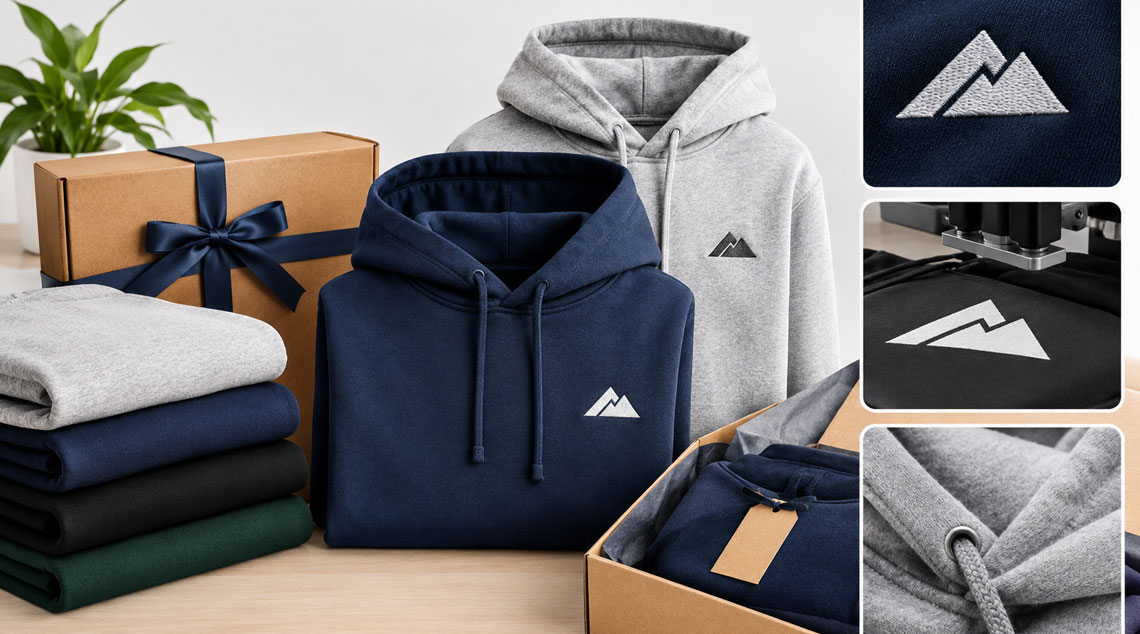
Good placement makes a hoodie print look intentional, and it changes with hoodie style and size. For a left chest logo, many printers place the design about 3 to 4 inches from the center of the garment, with artwork usually around 3.5 inches wide. Center chest designs must fit between the hood seam and the pocket, so keep them shorter than a T-shirt front print. The back offers the largest flat area and suits big graphics and wordmarks, especially on streetwear drops. Sleeve prints work well as a second location, running down the arm or placed near the bicep. On oversized and drop shoulder blanks, the seam sits lower, so always test placement on a real sample before printing a full run.
Buying Wholesale Blank Hoodies
When you buy wholesale blank hoodies for printing, treat the first order as a test of the supplier as well as the product. Ask for a spec sheet that lists GSM, fiber blend, face yarn, body construction, and flat measurements for every size. Order samples in light and dark colors, then print and wash them before placing a bulk order. Check that shades stay consistent between batches, because a slightly different black or navy can ruin a team order. Confirm restock lead times and stock depth in core colors and sizes, since running out mid-season is one of the biggest risks for print shops. A dependable supplier with consistent blanks makes every winter order easier to plan and deliver on time.
Winter Prep for Print Shops
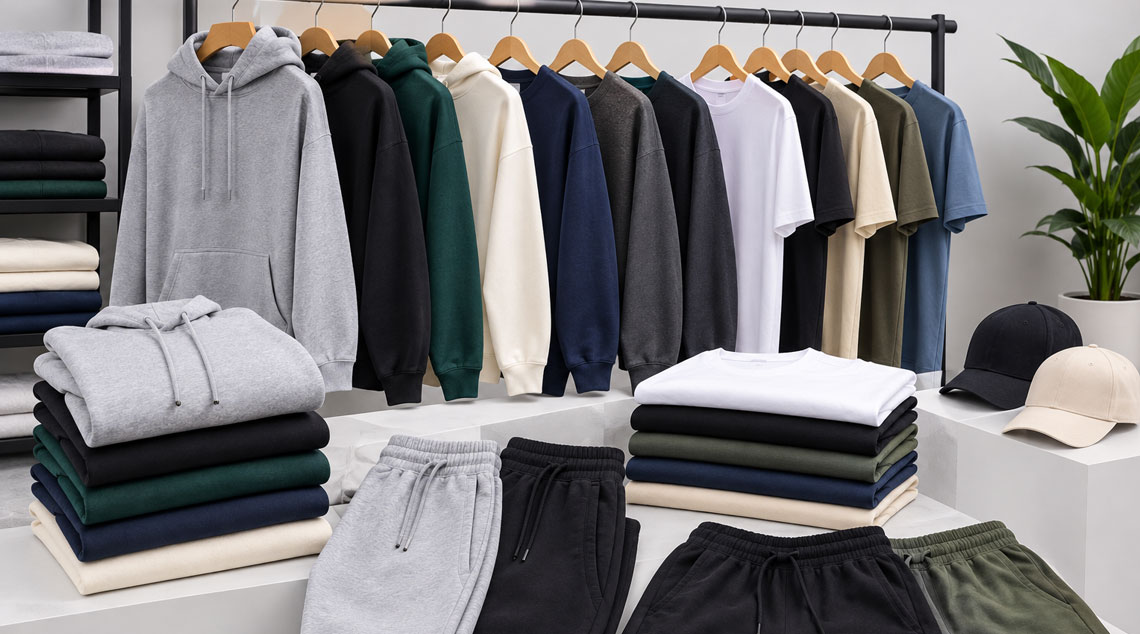
Winter season is the season when print shops benefit from having planned their hoodie inventory and scheduling prior to the start of the season. Create depth in your perennial colors like black, heather grey, navy blue, and white, and then include some seasonal colors too for the retail clients. Have more variety in terms of sizes because team/school/university and corporate prints usually require sizes from small to 3XL. Have separate platens for printing hoodies, along with additional adhesive, low-bleed ink, and blocker base. Schedule the prints for dark blended fleece in advance and have pre-tested the dryer settings to prevent dye migration problems. Lastly, provide cut-off dates for orders from your clients for the holidays.
Final Thoughts
The best hoodies for screen printing improve your press performance, ensure your prints are clearer, and ensure your customers are happier during your busiest season of the year. Consider a smooth cotton blend fabric, a stable weight in the mid- to heavy-weight category, and neat construction that provides an acceptable print area. Ensure compatibility between the ink and the fabric blend, be very cautious about the curing temperature of the ink, and always test each blank prior to placing the bulk order. With the appropriate blank and a well-tested process, hoodies can turn out to be the most satisfying product that a print shop can offer during the winter season. For those who plan their winter stock of hoodies, Zuni Sportswear has wholesale blank hoodies available for bulk orders.
Frequently Asked Questions (FAQs)
Q1: What is the best fabric for screen printing on hoodies?
A cotton-rich fleece with a 100% cotton face, such as an 80/20 blend, is the most reliable choice. It prints like pure cotton while holding its shape better after washing.
Q2: Can you screen print on 50/50 hoodies?
Yes. 50/50 hoodies print well, but dark colors need low-bleed ink and careful curing to prevent dye migration.
Q3: What GSM is best for heavyweight blank hoodies?
Heavyweight blank hoodies usually start around 350 GSM. Midweight fleece in the 270 to 320 GSM range is also a strong choice for everyday printing.
Q4: Why do prints crack or fade on hoodies?
Most cracking and fading comes from under-cured ink, the wrong ink for the blend, or a fuzzy fleece face. Testing cure temperature and choosing a smooth-faced blank solves most of these problems.