Screen Printing vs DTG vs Embroidery: A Simple Comparison
December 15, 2025
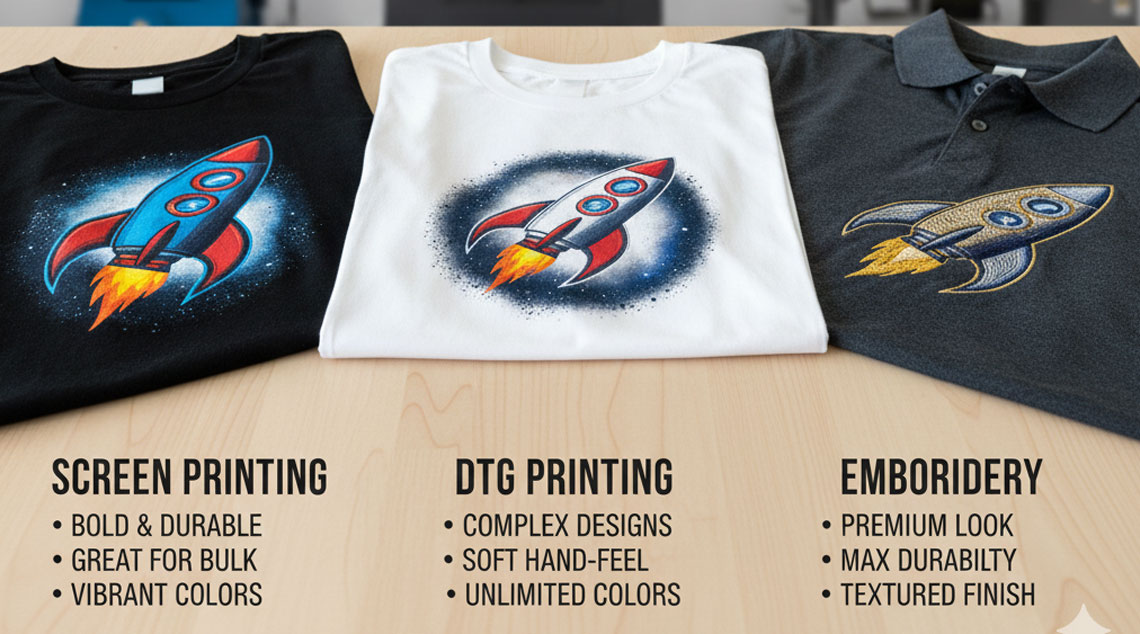
The method of decoration you select plays a major role in custom apparel. It influences the appearance, texture, and durability of a design. A lot of people are in the dark about the differences between screen printing, DTG printing, and embroidery. All three methods have their pros and cons. Screen printing suits for big and uncomplicated designs. DTG printing is the best option for intricate and vibrant coloration. Embroidery generates 3D designs that are very durable. Understanding these disparities helps users get the right quality at the best price and look in no time at all.
Why Choosing the Right Print Method Matters for Your Custom Clothing
Selecting the proper printing technique is a very crucial step in making the custom clothing. It alters the look of the garment as well as the way it feels on your skin. The printing technique has a big impact on the longevity of the design. Some printing methods sit on top of the fabric while others penetrate the fibers completely. If you use an incorrect method, then your designs may even fade, crack, or peel sooner than their estimated lifetime. Different fabrics react in various ways. So, for bulk orders, choosing the right method is crucial. A clear understanding of every method will guide you to make prudent choices for every project.
What is screen printing?
One of the oldest techniques in custom clothing is screen printing. A mesh screen is used to transfer ink to the material. Separately, each color of the design needs a screen. The process is rapid and cost-effective for mass production. It is primarily suitable for heavy materials such as cotton or blends. However, the color quality and durability of screen printing are great, as they can even withstand repeated washes. Thus, it is a common practice for t-shirts, hoodies, and sweatshirts. Also, several brands prefer screen printing for logos and minimalistic art.
Advantages of Screen Printing
Custom clothing has a lot of benefits with screen printing as the main technique. The method joins together the vivid and the lasting qualities of the prints. That is why its cost is not a disadvantage for massive orders since the price drops per piece. It applies to a large array of fabrics, with the cotton blends being the most frequent. For screen-printed logos or designs with only a few colors, the latter is the best option. It gives a stunning impact that cannot be ignored. Brands and teams are mainly drawn to its long-lasting nature and consistent quality.
Direct-to-Garment vs Screen Printing
Direct-to-garment and screen printing show how ink works with fabric. DTG applies the ink directly into the fibers and thus is not limited to 1 color only. Screen printing fills fabric with ink, making it great for opaque colors. However, DTG is suitable for small quantity orders or custom items. Screen printing is faster for mass production once the screens are ready. This distinction helps decide whether to use DTG, embroidery, or other methods.

What Is DTG Printing?
DTG printing, or direct-to-garment printing, prints directly on the fabric the designs. It uses top-quality printers and ink to produce very detailed designs. This method is excellent for small runs or unique personalized clothing pieces. It is best for graphic work containing parts with different shades or photos. DTG is better on plush fabrics like cotton to make the end product comfortable to wear. The ink penetrates the threads, thus the pattern doesn’t feel hard. DTG printing gives you the possibility of making more intricate and artistic designs than screen printing.
Advantages of DTG Printing
Custom clothing has numerous advantages when using DTG printing. It is capable of printing easily, even on multi-colored and detailed designs. Only a little preparation is required, which makes it suitable for small orders. The ink is absorbed by the fibers, which therefore keeps the fabric soft. It is a very good method for personalized or custom clothing projects. This method has the ability to deal with gradients, photos, and fine artworks. DTG is very accommodating and suitable for brands or individuals who require to have high-detail designs.
Embroidery vs Screen Printing
In custom clothing, the question of embroidery versus screen printing is a usual one. Embroidery threads the design onto the fabric, making it textured and giving it a premium look. On the other hand, screen printing applies ink on top of fabric, which gives a flat look. Embroidery is more durable and suitable for logos or small texts. Screen printing, on the other hand, is cheaper and faster with large designs. In many cases, brands choose embroidery or screen printing depending on style, budget, and fabric. Embroidery is very classic, and screen printing is very bright and bold.
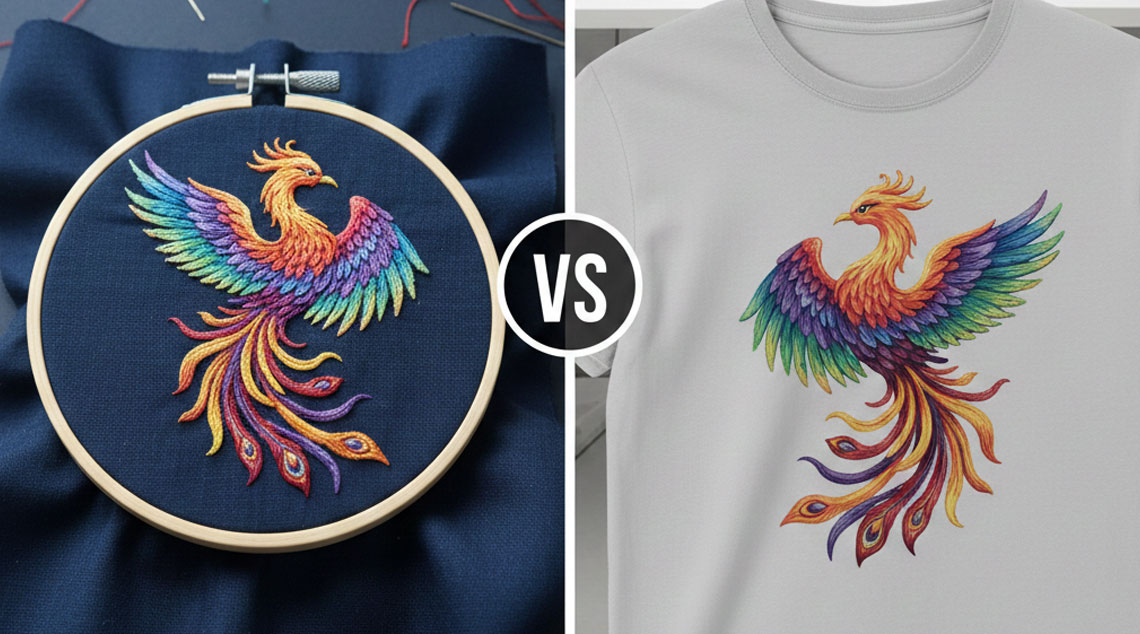
Embroidery vs DTG Printing
Embroidery and DTG printing differ in the materials used - thread vs. ink. Embroidery offers long-lasting texture and quality, while DTG creates detailed, colorful prints. Embroidery is best for small logos, monograms, or luxury garments. DTG is better for photos or intricate artworks. Both have been applied by the US custom clothing industry. Also, several brands have to decide between embossed and colorful prints. Their decision mainly depends on the fabric and design style.
Choosing the Right Method for Your Custom Clothing
Choose a technique based on fabric, order size, and design. Screen printing is best for large, simple orders. DTG printing suits complex prints and smaller orders. Embroidery is most appropriate for creating high-quality garments, logos, or textured designs. DTG and embroidery printing are different. Knowing how they differ helps you know what to expect from the final garment. Choosing the right technology is a trade-off between price, quality, and look. This guarantees that your custom apparel has a long lifespan.
Frequently Asked Questions (FAQs)
Q1: What is DTG printing vs embroidery?
Direct-to-Garment printing uses ink to print directly on fabric, while embroidery stitches a design with thread. For customers who want exquisite custom garments from Zuni, this will give you both options.
Q2: Which is better for small orders, DTG or embroidery?
With small runs or items personalized to your audience, DTG is going to be the best choice, while embroidery will be better for putting logos on hats. Zuni will work with you to figure out the best course for your project.
Q3: Can I mix DTG and embroidery on one garment?
Yes, DTG combined with embroidery at the same time can produce a special appearance. Zuni makes custom screen printing and Embroidery, too.
Q4: How do I choose between DTG, screen printing, and embroidery?
Reflect upon the difficulty of the design, the material, and the quantity of the order. Zuni helps you select the most appropriate technique for your personalized apparel requirements.
Conclusion
Screen printing, DTG, and embroidery present different strengths. Screen printing is suitable for large orders with striking artworks. DTG is appropriate for small circles or intricate, vibrant prints. Embroidery creates a very soft and high-end quality that can last for many years. Evaluating printing techniques helps custom clothing customers. They make smart decisions and get professional results.